63 bets · 6 selections
Lucky 63 calculator: all 63 bets from six selections, worked out
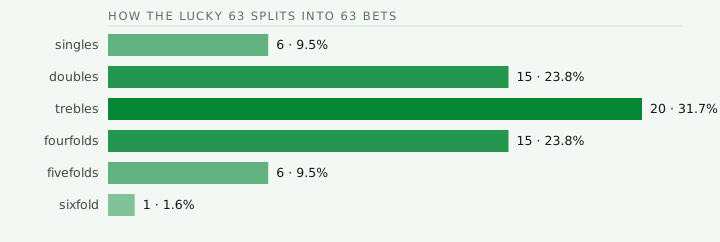
A Lucky 63 is six selections combined into 63 bets — six singles, fifteen doubles, twenty trebles, fifteen fourfolds, six fivefolds and one sixfold. It is the largest of the standard lucky bets.
How a Lucky 63 is made up
A Lucky 63 covers every combination from singles to the sixfold across six selections. That comes to 63 separate bets, so a £1 Lucky 63 costs £63.00 rather than £1 — and £126.00 if you place it each way.
| Line type | Number of bets | Share of the bet |
|---|---|---|
| singles | 6 | 9.5% |
| doubles | 15 | 23.8% |
| trebles | 20 | 31.7% |
| fourfolds | 15 | 23.8% |
| fivefolds | 6 | 9.5% |
| sixfold | 1 | 1.6% |
| Total | 63 | 100% |
A worked Lucky 63 example
Take six selections between evens and 4/1, staked at £0.25 a line with every selection winning. The figures below come from the same calculation the tool above runs.
- Unit stake
- £0.25
- Total stake
- £15.75
- Returns
- £1,417.25
- Profit
- +£1,401.50
| Selection | Fractional | Decimal |
|---|---|---|
| 1 | 2/1 | 3.00 |
| 2 | 3/2 | 2.50 |
| 3 | 3/1 | 4.00 |
| 4 | 1/1 | 2.00 |
| 5 | 4/1 | 5.00 |
| 6 | 5/2 | 3.50 |
When a Lucky 63 is the right bet
Sixty-three units is a substantial bet. At £1 a line that is £63, and each way it is £126, which puts the Lucky 63 well outside casual territory. Most people who place one do so in units of 10p or 25p, and the calculator handles fractional unit stakes for exactly that reason.
The structure follows the same rule as the rest of the family: two to the power of six, minus one. What changes at this size is where the value sits. With 41 of the 63 lines being trebles or bigger, the bet is dominated by its multiples, and the six singles become a comparatively thin safety net. One winner on a Lucky 63 will very rarely return the stake.
That makes the Lucky 63 a genuinely aggressive bet despite its reputation as a safe one. The singles create an impression of coverage that the numbers do not really support at this scale. If your intention is protection rather than upside, a Lucky 15 on your four strongest selections usually serves better than spreading the same money across six.
All-winner bonuses reach their highest percentages here, since six from six is a rare event. As with every bet in this family the terms belong to the bookmaker, not to any industry standard, and a single non-runner commonly voids the bonus entirely.
If the reason you are drawn to a Lucky 63 is the bonus, it is worth checking that condition specifically before committing sixty-three units. Six selections across a card carry a meaningful chance that at least one is withdrawn, and a bonus that evaporates on a non-runner is not a bonus you can plan around.
What it does well
- Very large upside if several bigger prices land
- Highest all-winner bonus percentages in the family
- Every combination of six selections is covered
What it costs you
- A 63-unit stake is large in absolute terms
- One winner almost never returns the outlay
- The safety net is thinner than the name implies
Lucky 63 questions
How many bets are in a Lucky 63?
Sixty-three: six singles, 15 doubles, 20 trebles, 15 fourfolds, six fivefolds and one sixfold.
How much does a Lucky 63 cost?
Sixty-three times your unit stake, so £63 at £1 a line and £126 each way. Unit stakes of 10p or 25p are common for this reason.
What is the difference between a Lucky 63 and a Heinz?
A Heinz is the same six selections without the singles — 57 bets rather than 63. The Heinz costs six units less and returns nothing unless at least two selections win.
Is a Lucky 63 a safe bet?
Less than it appears. Two thirds of the lines are trebles or larger, so the six singles provide only a thin floor. A single winner will rarely cover a 63-unit stake, and the bet behaves much more like a multiple than an insured one.
Can you place a Lucky 63 each way?
Yes, giving 126 bets in total. The place half settles at whatever fraction the race pays, and the calculator settles both halves at once.