7 bets · 3 selections
Patent bet calculator: seven bets from three selections, with bonuses
A Patent is three selections combined into seven bets: three singles, three doubles and one treble. One winner is enough to get a return, which makes it the small-scale equivalent of a Lucky 15.
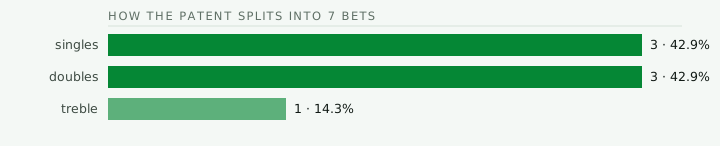
How a Patent is made up
A Patent covers every single, double and the treble across three selections. That comes to 7 separate bets, so a £1 Patent costs £7.00 rather than £1 — and £14.00 if you place it each way.
| Line type | Number of bets | Share of the bet |
|---|---|---|
| singles | 3 | 42.9% |
| doubles | 3 | 42.9% |
| treble | 1 | 14.3% |
| Total | 7 | 100% |
A worked Patent example
Take three selections at 3/1, 2/1 and 5/1, staked at £1.00 a line with every selection winning. The figures below come from the same calculation the tool above runs.
- Unit stake
- £1.00
- Total stake
- £7.00
- Returns
- £139.00
- Profit
- +£132.00
| Selection | Fractional | Decimal |
|---|---|---|
| 1 | 3/1 | 4.00 |
| 2 | 2/1 | 3.00 |
| 3 | 5/1 | 6.00 |
When a Patent is the right bet
The Patent sits between the Trixie and the Lucky 15 in both cost and behaviour. Seven units buys full coverage of three selections including the singles, so no matter how the day goes, one winner means the bet is not a complete loss. That single feature is why the Patent survives as a staple of the betting shop.
Because it includes singles, the Patent is one of the bets that usually carries bookmaker bonuses. The familiar structures are an uplift on the odds when exactly one selection wins, and a percentage added to the return when all three win. As with the rest of the lucky family, the terms are set by each firm rather than by any standard, so the calculator takes your bookmaker’s actual numbers instead of assuming.
The trap with a Patent is price sensitivity. With three odds-on selections the singles return barely more than the stake, and the seven-unit cost turns a nominal winner into a loser. The bet works when your selections are priced generously enough that a single winner roughly covers the outlay and two winners produce a real profit. It is worth running your intended prices through before committing, because the break-even point sits higher than most people expect.
Non-runners are handled the same way across the whole multiple family: the withdrawn selection settles at 1.00, the treble drops to a double, and the affected doubles drop to singles. A Patent with one non-runner behaves almost exactly like a Patent on the remaining two selections plus a returned stake.
The Patent is also the smallest bet on which a bookmaker bonus is worth thinking about, and that changes the arithmetic more than people expect. A one-winner uplift applied to a single at a decent price can be the difference between recovering most of the seven-unit stake and recovering half of it, which is precisely the situation the bet exists to handle.
What it does well
- One winner produces a return
- Eligible for the usual bookmaker bonuses
- Small enough to be a realistic recreational bet
What it costs you
- Seven units is a lot of stake on three selections
- Short prices make it very hard to show a profit
- Easy to mistake a nominal winner for a real one
Patent questions
How many bets are in a Patent?
Seven: three singles, three doubles and one treble. A £1 Patent costs £7, or £14 placed each way.
Does a Patent pay out with one winner?
Yes. The single on the winning selection settles, and many bookmakers add a consolation uplift when exactly one of the three wins. Whether that leaves you in profit depends on the price — at short odds a single winner rarely covers the seven-unit stake.
What is the difference between a Patent and a Trixie?
A Trixie is the same three selections without the singles, so it is four bets rather than seven. It costs less but returns nothing from a single winner, and it does not usually attract bonuses.
What bonuses apply to a Patent?
Typically a one-winner odds uplift and an all-winners percentage bonus, but the exact terms are set by each bookmaker and often exclude non-runners. Enter the terms your own bookmaker applies in the bonus fields.
Is a Patent worth it?
It depends on your prices. As a rough guide, the bet needs selections priced high enough that one winner comes close to returning the seven-unit stake. With three odds-on picks it very rarely does.