
Each way calculator: work out what your each way bet returns
This each way bet calculator settles both halves of the bet: one part on the selection winning, one on it finishing placed. It works out each way returns at whatever place terms the race is paying.
How each way returns are settled
Asking for £10 each way costs £20, because the each way calculator is settling two separate £10 bets. The win half is settled at the full price. The place half is settled at a fraction of that price — usually a fifth or a quarter — if your selection finishes within the paid places.
A winner collects on both halves. A selection that finishes second or third collects on the place half only, and the win half loses. Anything outside the places loses both. The most common misunderstanding is expecting a winner to pay only the win part, when in fact a winning selection is also a placed one and both halves pay out.
At 7/1 with a £10 each way stake and 1/5 place terms, a win returns £80 from the win half plus £24 from the place half — £104 in total from a £20 outlay. The same selection finishing third returns only the £24, which is a £4 profit rather than a loss, because the price was long enough for the place return to exceed the total stake.
The break-even price for an each way bet
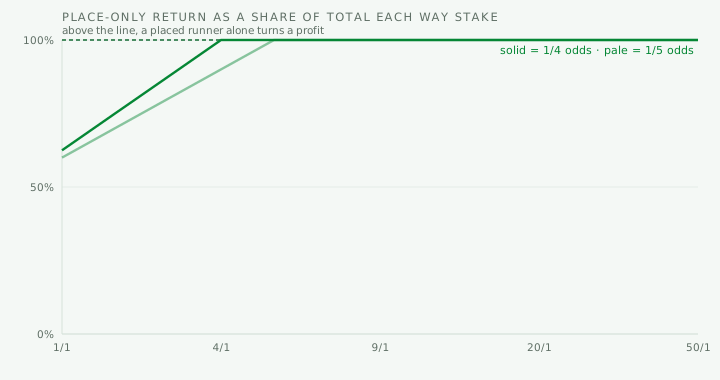
A placed-but-beaten selection only shows a profit if the place return exceeds your total two-part stake, which is the threshold the each way calculator makes visible. At 1/5 odds that requires a price of at least 9/1, because a fifth of 9 is 1.8 and the place half must return more than double the single-part stake. At 1/4 odds the threshold falls to 7/1.
This is why "each way value" clusters at particular prices. Below the threshold, a placed selection still leaves you out of pocket, and the each way component functions as partial insurance rather than a profitable bet in its own right. Above it, placing alone is profitable, which changes the character of the bet entirely.
It is also why extra place offers matter. A bookmaker paying four or five places rather than three does not change the price, but it materially changes how often the place half pays — and in a big handicap that is a genuine, quantifiable improvement rather than a marketing gesture.
How many places are paid and how place terms are set
Place terms are set by the size and type of the race, not by the bookmaker's generosity, so the each way bet calculator asks you for them rather than assuming. Handicaps with sixteen or more runners typically pay four places at a quarter of the odds; smaller handicaps and non-handicaps commonly pay three at a fifth; races with fewer than five runners are usually win-only.
Because the terms vary by race, the each way calculator cannot guess them. Check the terms on your betting slip or the race header — the difference between a fifth and a quarter of the odds changes each way returns substantially on a long-priced selection.
Each way calculator questions
How does an each way bet work?
It is two equal bets: one on your selection winning at the full price, and one on it finishing in the paid places at a fraction of that price. A £10 each way bet costs £20 in total.
What does 1/5 odds a place mean?
The place half of your bet is settled at one fifth of the win price. On a 10/1 selection the place part pays at 2/1, so a £10 place stake returns £30 if the selection finishes within the paid places.
Do you get paid twice if your each way selection wins?
Yes. A winner is also a placed runner, so both halves of the bet pay out — the win part at the full price and the place part at the fraction.
When is an each way bet worth it?
Broadly when the price is long enough that the place return alone beats the total stake — around 9/1 at 1/5 odds, or 7/1 at 1/4 odds. Below that, the place half reduces losses rather than producing profit.
How many places does an each way bet pay?
It depends on the race. Big handicaps commonly pay four places at 1/4 odds, ordinary races three at 1/5, and small fields may be win-only. The terms are shown on the race and on your betting slip.
What happens to an each way bet in a dead heat?
The stake on the affected part is reduced in proportion to the number of runners sharing the position, and the remainder is settled as a loser. The dead heat calculator works out the exact figure.