
26 bets · 5 selections
Canadian bet calculator: 26 bets from five selections
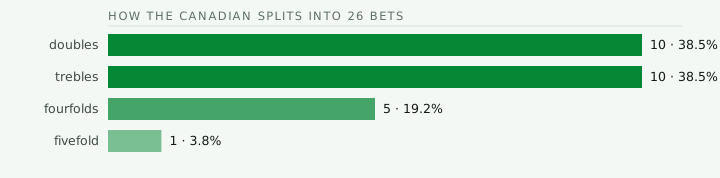
A Canadian — also known as a Super Yankee — is five selections combined into 26 bets: ten doubles, ten trebles, five fourfolds and one fivefold. There are no singles, so two winners are needed before anything returns.
How a Canadian is made up
A Canadian covers every double, treble, fourfold and the fivefold across five selections. That comes to 26 separate bets, so a £1 Canadian costs £26.00 rather than £1 — and £52.00 if you place it each way.
| Line type | Number of bets | Share of the bet |
|---|---|---|
| doubles | 10 | 38.5% |
| trebles | 10 | 38.5% |
| fourfolds | 5 | 19.2% |
| fivefold | 1 | 3.8% |
| Total | 26 | 100% |
A worked Canadian example
Take five selections between 6/4 and 4/1, staked at £0.50 a line with every selection winning. The figures below come from the same calculation the tool above runs.
- Unit stake
- £0.50
- Total stake
- £13.00
- Returns
- £935.50
- Profit
- +£922.50
| Selection | Fractional | Decimal |
|---|---|---|
| 1 | 2/1 | 3.00 |
| 2 | 5/2 | 3.50 |
| 3 | 3/2 | 2.50 |
| 4 | 4/1 | 5.00 |
| 5 | 3/1 | 4.00 |
When a Canadian is the right bet
The Canadian is the Yankee extended by one selection. The two names describe exactly the same bet, and which one your bookmaker uses is a matter of house style rather than any difference in settlement. If you see both on a betting slip, they are interchangeable.
At 26 units it is a middleweight multiple. The absence of singles keeps the cost below the 31-unit Lucky 31 while covering the same five selections, and every unit you stake goes into a combination rather than a standalone bet. That concentration is the point: when three or four of your five legs land, a Canadian pays considerably better than the equivalent lucky bet with the same money spread thinner.
The flip side is familiar. One winner returns nothing, and with five selections in play the chance of exactly one winner is not remote. Before choosing a Canadian over a Lucky 31, it is worth asking honestly whether your fifth selection is there because you fancy it or because you needed a fifth.
Non-runners reduce a Canadian in the usual way. A withdrawn selection settles at 1.00, the fivefold becomes a fourfold, and every line containing it drops a leg — which effectively leaves you holding a Yankee on the remaining four selections.
The name confusion is worth clearing up because it causes real mistakes at the counter. Some firms print Canadian, others print Super Yankee, and a few list both on the same slip as though they were different products. They are not. If you are ever unsure which you have been given, count the lines: twenty-six means five selections with no singles, and that is a Canadian whatever the slip calls it.
What it does well
- All stake concentrated in multiples
- Five units cheaper than a Lucky 31
- Strong returns when three or more legs land
What it costs you
- One winner returns nothing at all
- No bookmaker bonuses in the usual terms
- 26 units is still a significant stake
Canadian questions
Is a Canadian the same as a Super Yankee?
Yes. The two names describe an identical bet — five selections across 26 lines with no singles. Bookmakers use one label or the other, and settlement is the same either way.
How many bets are in a Canadian?
Twenty-six: ten doubles, ten trebles, five fourfolds and one fivefold. A £1 Canadian costs £26, or £52 each way.
How many winners does a Canadian need?
At least two, because there are no singles. Two winners land one double; the returns rise steeply from there as more legs come in.
What is the difference between a Canadian and a Lucky 31?
The Lucky 31 adds the five singles, taking it to 31 bets. It costs five units more and pays out from a single winner, which a Canadian never does.
What happens if a selection is withdrawn from a Canadian?
That leg settles at odds of 1.00 and every line containing it drops a fold, leaving you with the equivalent of a Yankee on the remaining four selections.